
Mobile is converging with everything. How far you go is your call.
Two things are true at once. Brands in every industry are adding mobile to the services they already sell. And no two of them want the same amount of convergence. Reach is built for both.
The relationship is the real asset
For years, mobile meant one of the big three carriers. You picked a network, signed up, and got a bill.
That is changing. The brands people choose every month, their internet provider, a favorite magazine, the service that delivers their groceries and prescriptions, are starting to offer mobile too. Not as an add-on, but as part of the service people already pay them for.
Most of the industry talks about this as internet plus mobile. That is one example, and an important one. The bigger shift is convergence itself: mobile becoming one more part of a relationship a brand already owns. A brand that earns a customer's trust and payment every month is a more natural home for their mobile service than a carrier they never think about.
Reach exists to make that possible. Any company can take our platform and launch a branded mobile service next to whatever it already sells, and our clients are already doing it across very different industries. Working with them has taught us one thing above all: there is no single right amount of convergence.
Any subscription can carry mobile
Any business with a recurring customer relationship can put mobile next to it. Three examples:
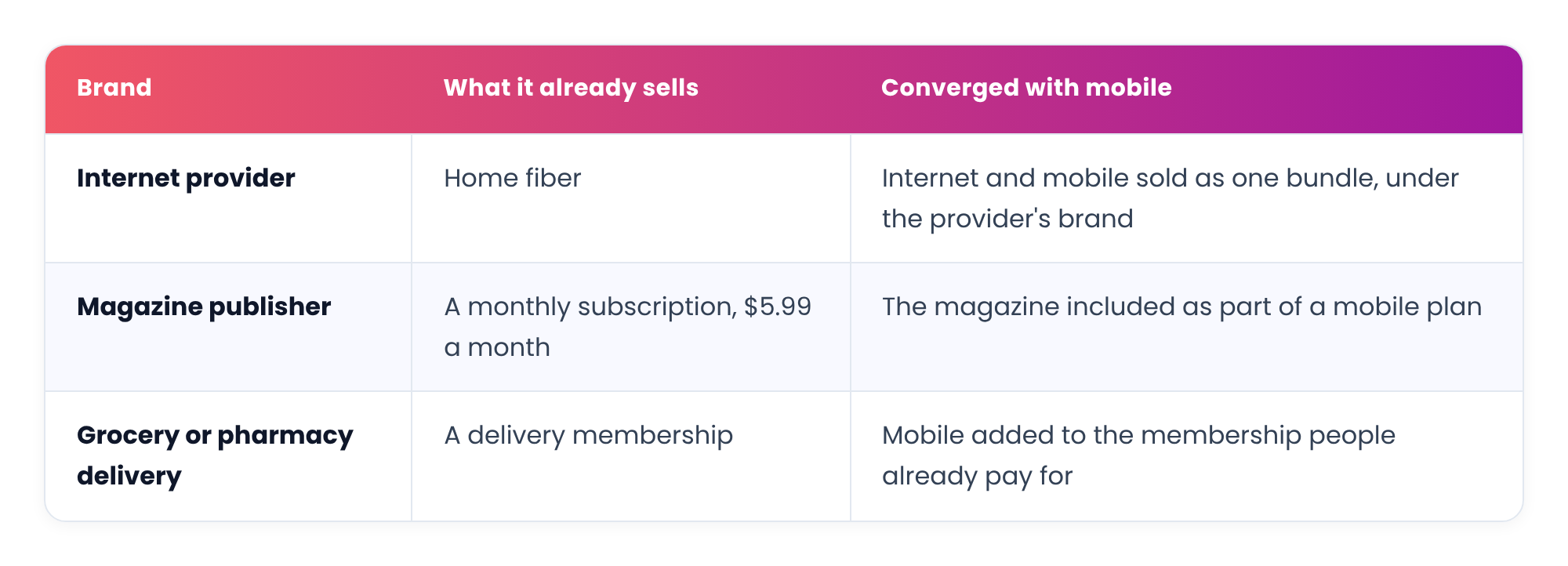
What these brands share is the relationship: trust, a payment on file, and a reason to reach the customer every month. Mobile turns that monthly touchpoint into an everyday one, because the phone is the service people use all day.
Convergence is a spectrum, not a switch
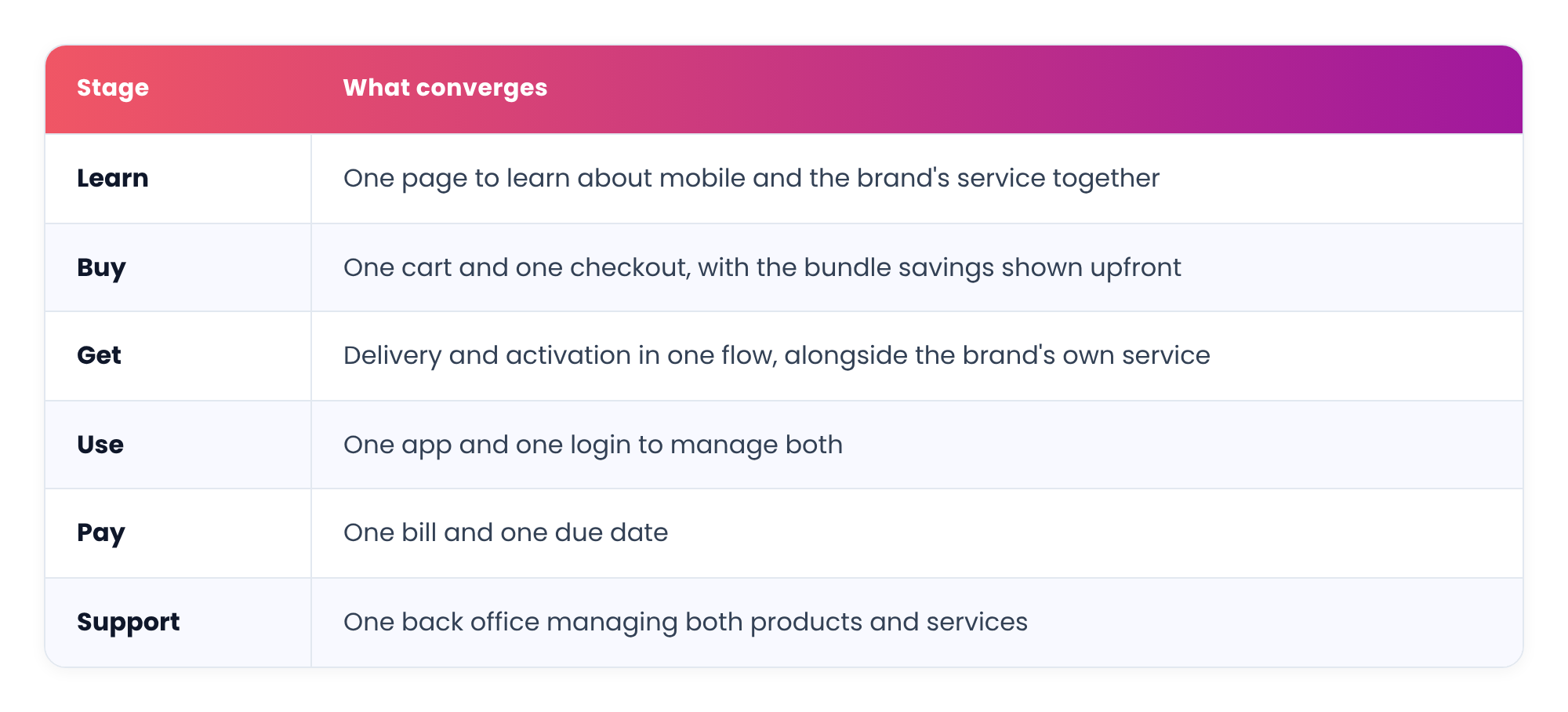
Look at the whole customer journey: Learn, Buy, Get, Use, Pay and Support. A brand can converge mobile with its service at every stage, or at just one.
What converging each stage means in practice:
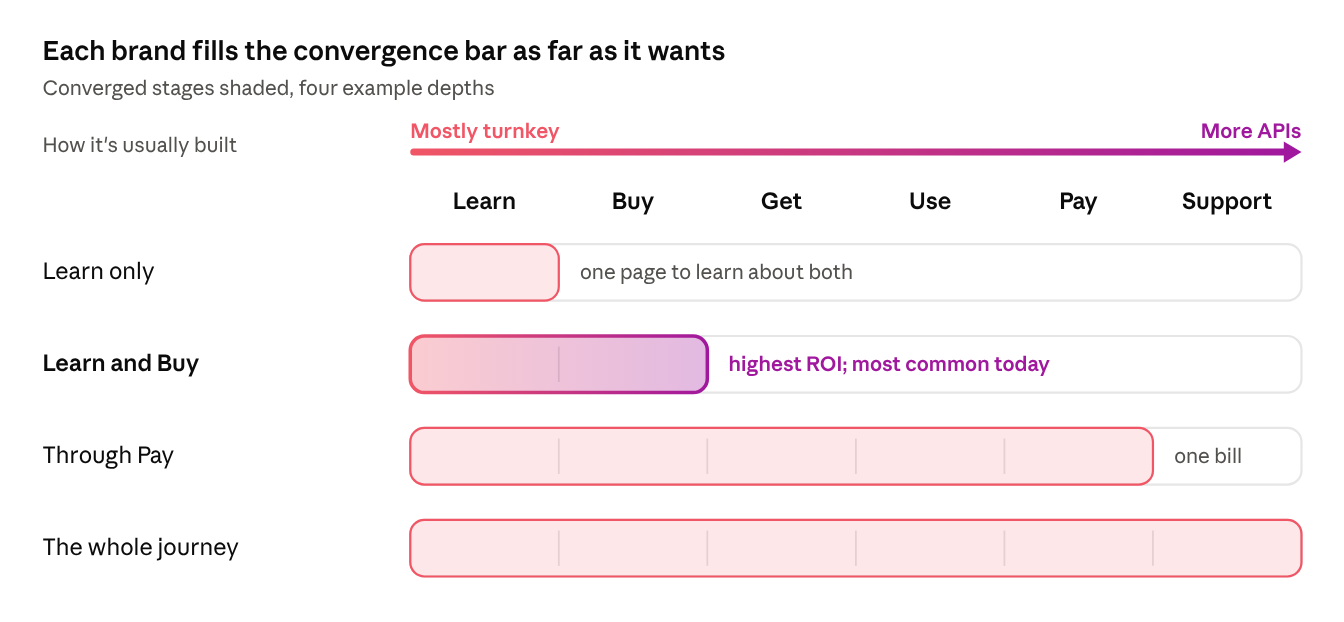
convergence bar · six stages, four example depths
Every converged stage can run on our turnkey platform, on our APIs, or on a mix of both. Most clients start turnkey and bring in APIs where they want more control.
Learn and Buy is where most clients start: one page to learn about both services, one cart to buy them. It is also where convergence has the highest ROI. Each stage after that takes more integration work and pays back less, so we recommend starting with Learn and Buy and going further when there is a reason to.
Three build options, plus a shortcut
Depth is one choice. The other is how much of the experience a brand builds itself, and that changes over time. Most clients start fully turnkey. As they scale and invest more, they move to the next option if and when they see fit.
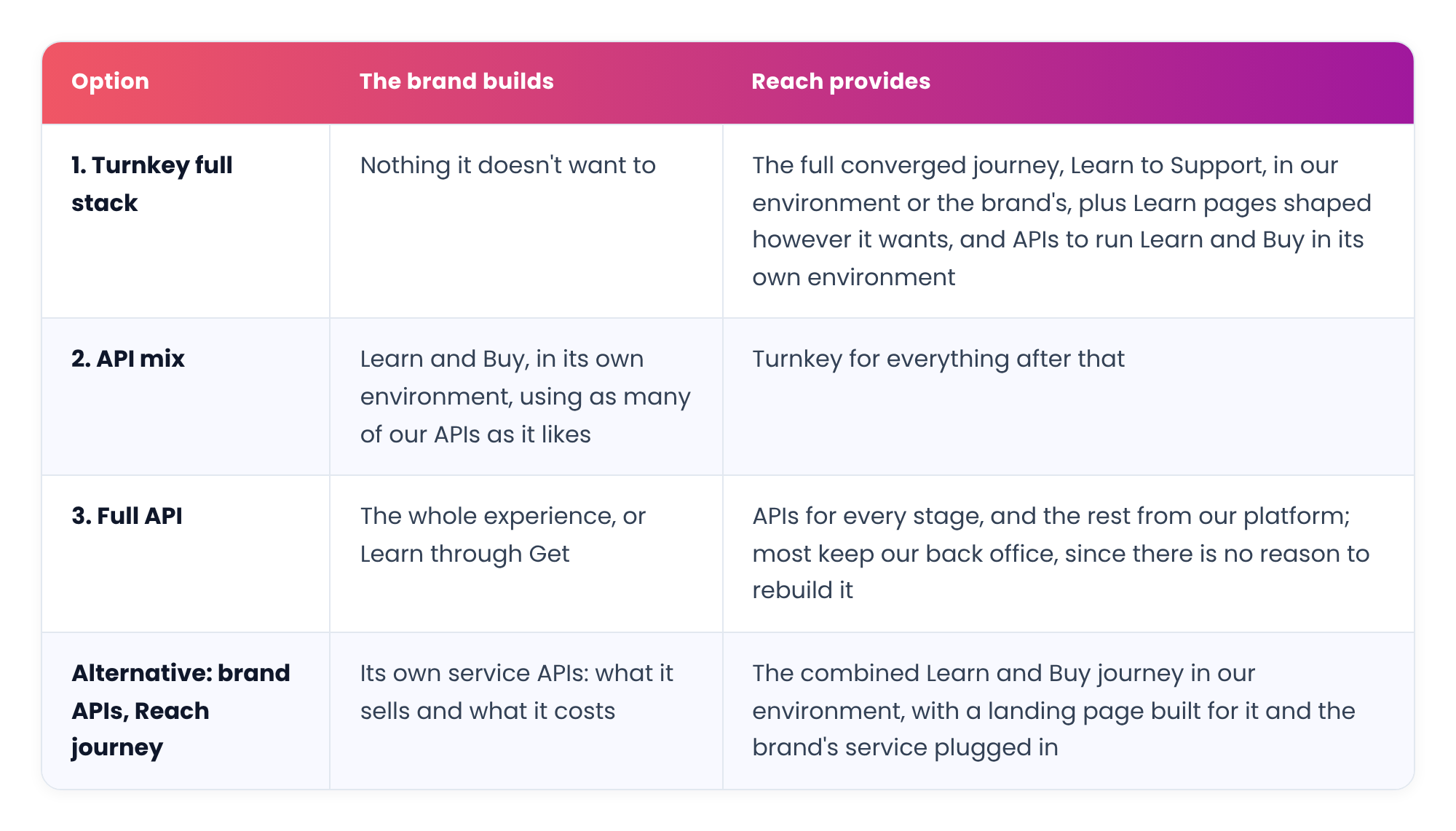
Most clients never feel the need to go beyond option 2, because the platform already handles the rest. They put their energy into the Learn experience instead. Very few rebuild the back office, because there is no reason to.
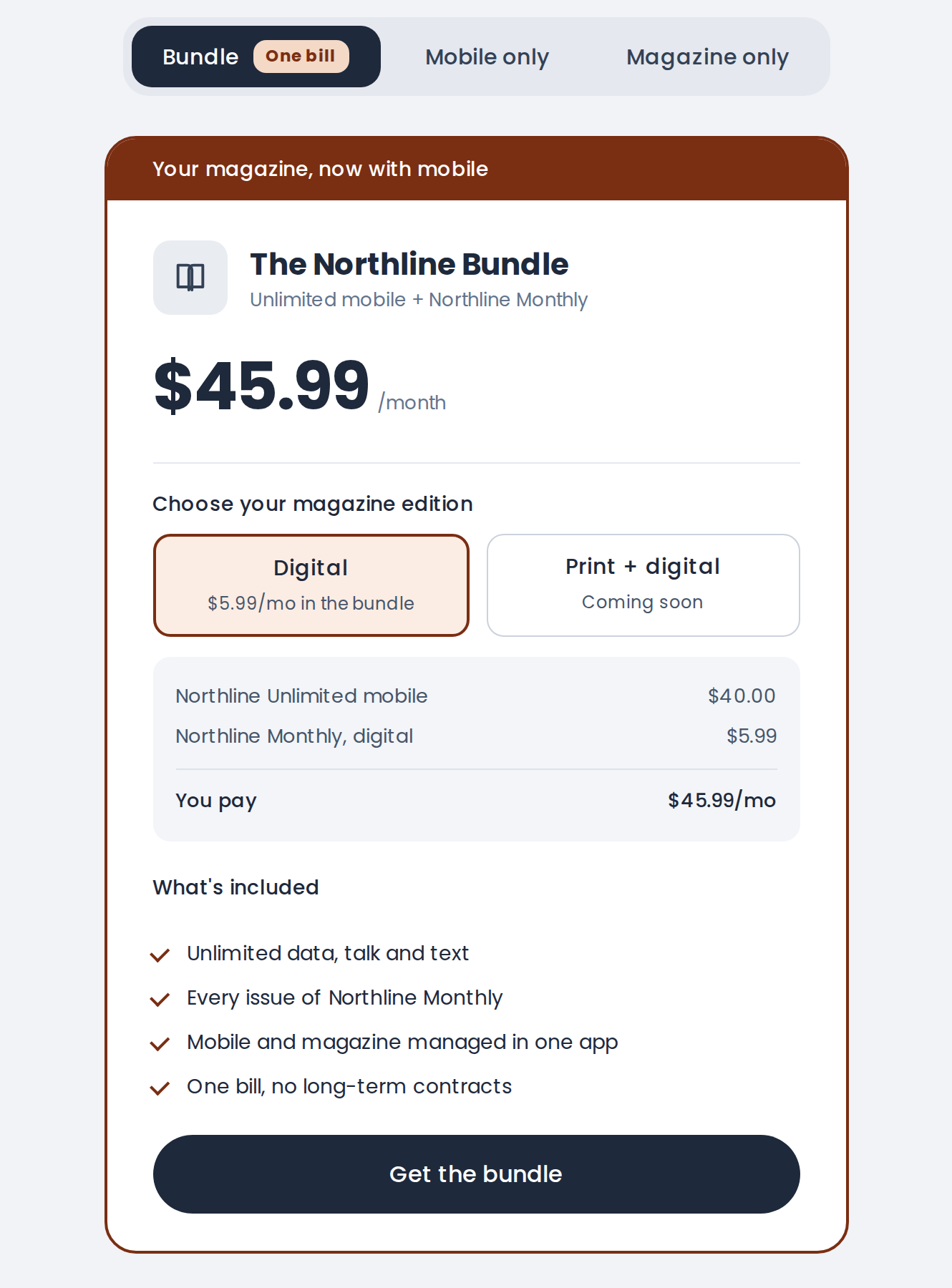
The alternative is not a step up from option 3. It is a shortcut that depends on what the brand sells, and suits a simple offer best. A magazine publisher exposes its $5.99 monthly subscription, and we build a landing page where people buy mobile and the magazine together. An internet provider does the same with its fiber plans.
See it in action
The screens below show the converged experience Reach offers, using example brands.
A magazine subscription. Here an example publisher, Northline, adds mobile to its $5.99 digital edition, and readers buy both in one cart.
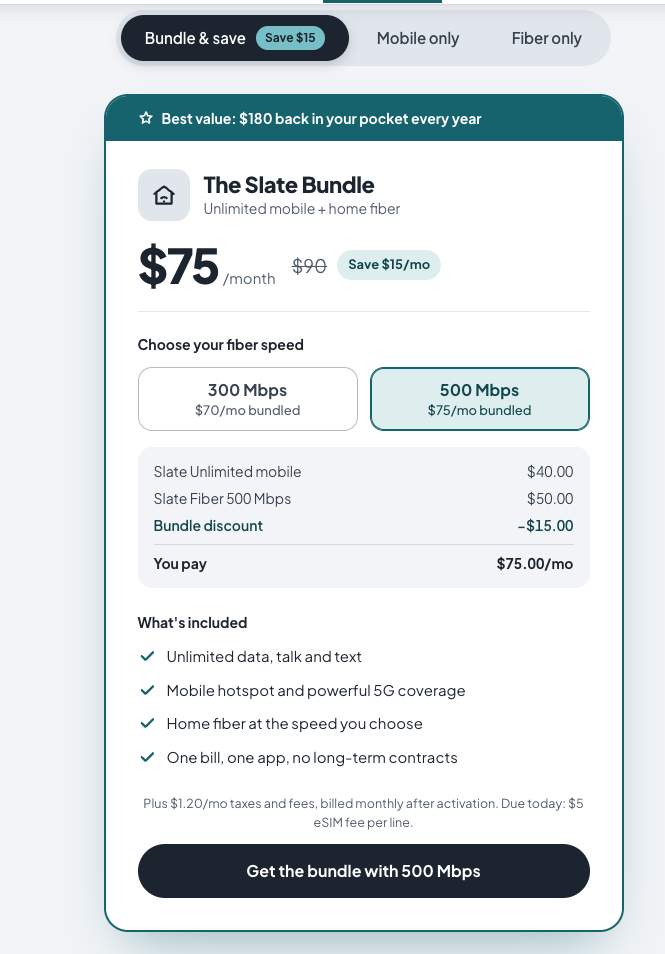
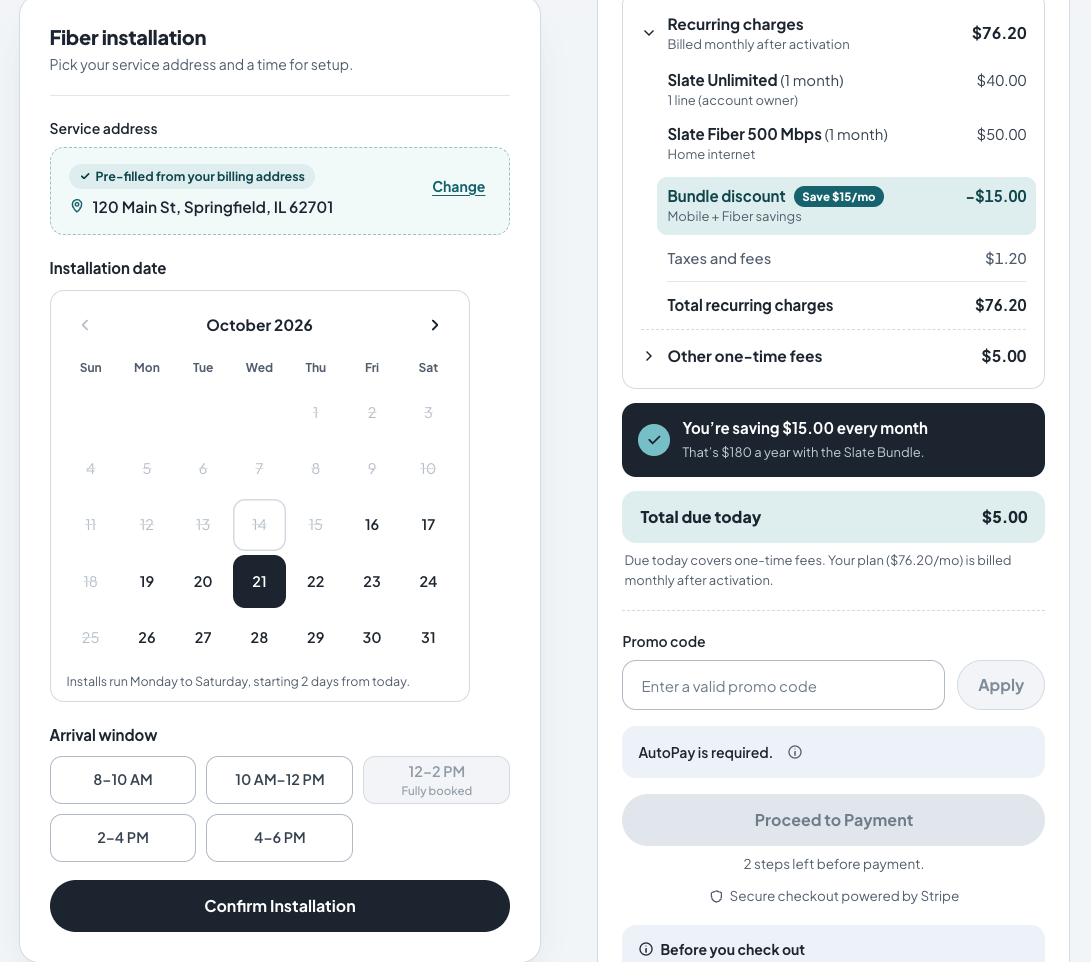
Internet and mobile. The same experience for an internet provider. Here an example brand, Slate, sells fiber and mobile as one bundle. People pick their fiber speed, see the bundle savings and book the install in the same checkout.
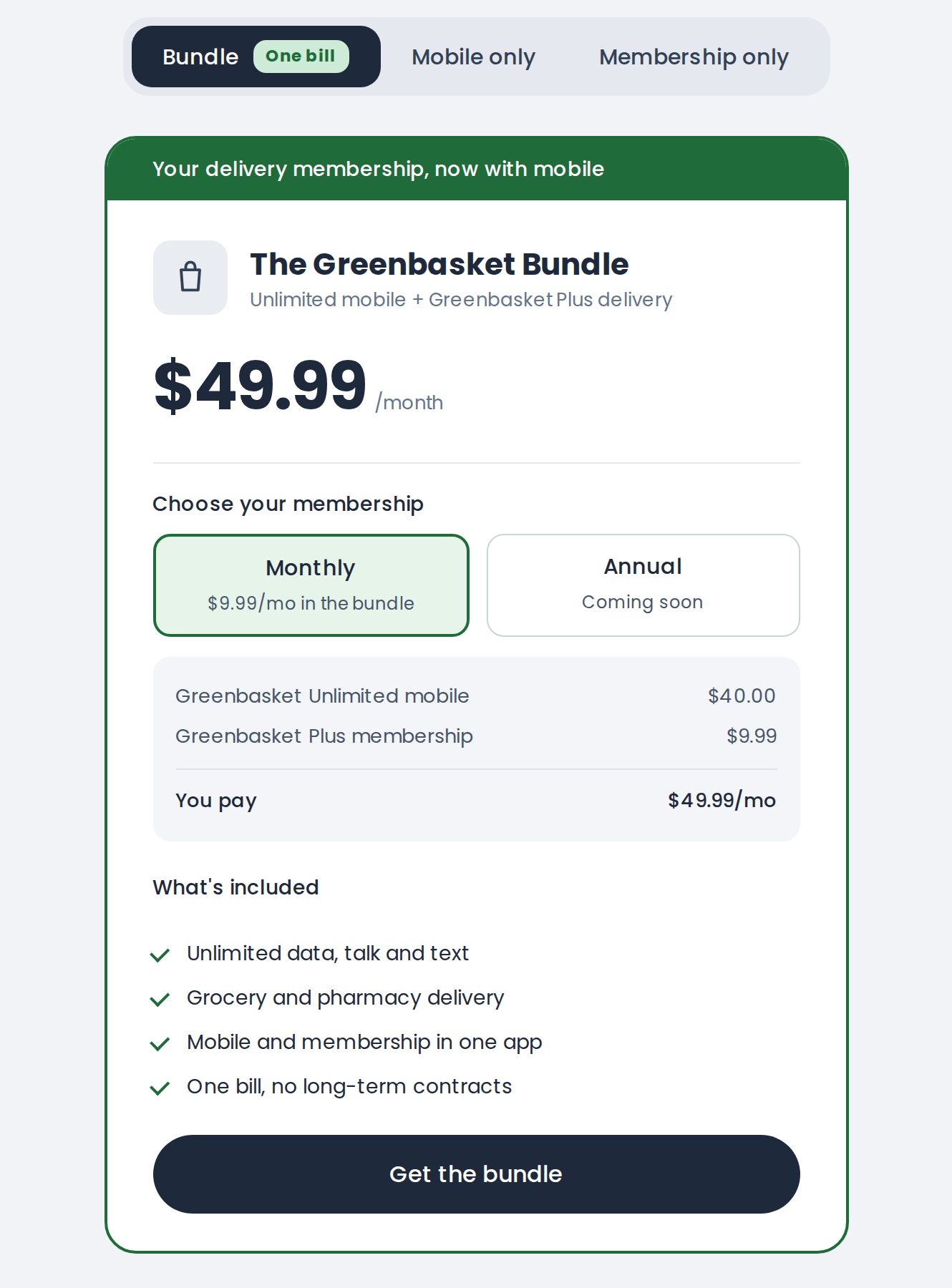
A delivery membership. The same experience again, where a grocery or pharmacy delivery service adds mobile to the membership its customers already pay for.
Why Reach makes this possible
Convergence only works if adding mobile is easy. Building a mobile service from scratch means network access, eSIM activation, billing, an app and a support team. That is years of work most brands should never have to take on.
Reach is a full-stack connectivity platform. The brand keeps what it does best: its brand, marketing, sales and the customer relationship. Reach powers the mobile operations underneath.
The result is a branded mobile service, live in weeks, not years, without building a telco stack.
One bill, or not: the brand decides
Billing is where the choice matters most. For many customers, one large total means bill shock. For others, one bill is simple and convenient. The brand knows its customers best, so the brand decides.
Reach supports both. A billing API adds the mobile lines to the bill the brand already sends. Or the brand gets a PDF of the mobile bill to attach to its own. Payment works the same way: it can run on the brand's side or on ours.
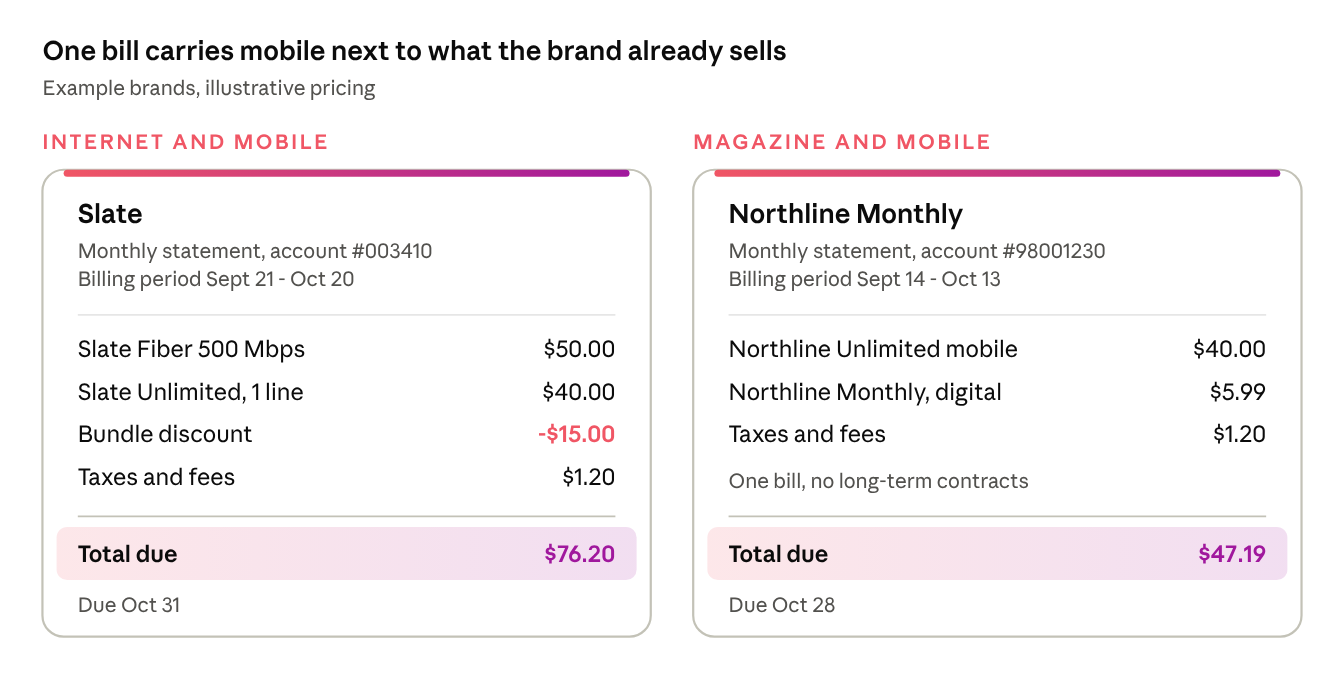
one bill · Slate internet and Northline magazine examples
Here is what one bill looks like for two example brands: an internet provider adding mobile to fiber, and a publisher adding mobile to a magazine subscription. One statement, one due date.
Even the biggest subscription companies run both models side by side:
Amazon bundles video, music and reading into Prime, but in the US still sells Kindle Unlimited, Music Unlimited and Audible as separate paid subscriptions, even to Prime members.
Google kept YouTube Premium apart from Google One for years, then added it to some Google One plans in May 2026.
None of them forces one model on every customer. There is no one right way to do it. It depends on you and your customers.
The bottom line
We don't sell one converged bundle, and we don't force convergence. We give each brand the platform and the choice: as converged as the whole journey, as light as a single Learn page, or anywhere in between. Our advice is to start with Learn and Buy, where convergence pays back the most.
"Every brand already has a relationship worth building on. Mobile should make that relationship stronger on the brand's own terms, whether that means one shared page or one shared bill." Harjot Saluja, Founder and CEO, Reach
If your business already has a monthly relationship with its customers, the question isn't whether mobile belongs in it. It's how far you want to take it. Book a demo with Reach to map out your version.
Sources: NerdWallet: Prime Reading vs. Kindle Unlimited, updated Aug 12, 2026 · Thurrott: Music Unlimited price for Prime members · Android Authority: YouTube Premium joins Google One, May 20, 2026